


Introduction
A fire extinguisher is one of the most essential safety tools in any building, providing immediate response during fire emergencies. Whether in residential, commercial, or industrial settings, having a properly functioning fire extinguisher can prevent minor incidents from turning into major disasters.
However, simply installing a fire extinguisher is not enough. Regular inspection and maintenance are critical to ensure it works effectively when needed. In the UAE, fire safety regulations require routine checks to maintain compliance with Civil Defense standards.
Understanding how often a fire extinguisher should be inspected helps building owners and facility managers ensure safety, avoid penalties, and maintain operational readiness. This guide by Sadaf al Bahar explains inspection schedules, key checks, and best practices to keep your fire extinguishers in optimal condition.
Why Fire Extinguisher Inspection Is Important
Fire extinguishers are often overlooked until an emergency occurs. Without regular inspection, they may fail due to pressure loss, blockage, or mechanical damage.
Routine inspection ensures that:
- The extinguisher is fully operational
- Pressure levels are within the safe range
- No physical damage or corrosion is present
- The unit is accessible and ready for use
- Compliance with UAE fire safety regulations is maintained
Regular inspection not only protects lives and property but also ensures that your building meets legal safety requirements.
How Often Should Fire Extinguishers Be Inspected?
Fire extinguisher inspection is not a one-time task. It requires multiple levels of checks performed at different intervals.
1. Monthly Visual Inspection
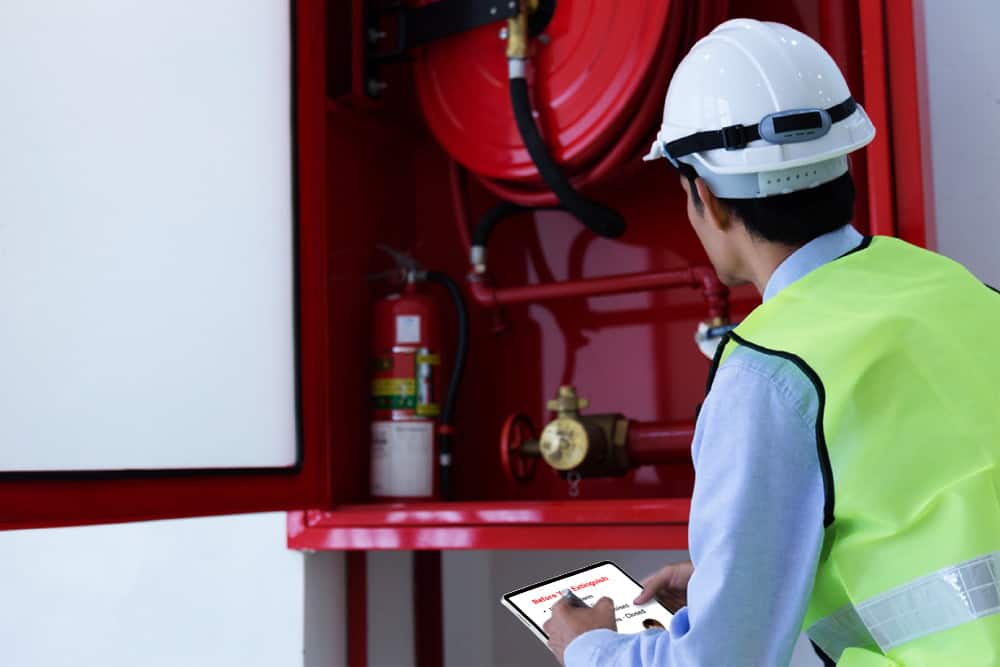
Monthly checks are the most basic and essential inspections. These can be carried out by building staff or facility managers.
What to Check:
- The fire extinguisher is in its designated location
- It is easily accessible and not blocked
- The pressure gauge is in the green zone
- No visible damage, leaks, or corrosion
- Safety pin and tamper seal are intact
Purpose:
Monthly inspections ensure that extinguishers are visible, accessible, and ready for immediate use at all times.
2. Annual Professional Inspection
A certified technician must conduct a detailed inspection at least once a year.
What It Includes:
- Thorough examination of all components
- Checking internal pressure and mechanical parts
- Verifying proper functioning
- Ensuring compliance with UAE Civil Defense standards
- Replacing or repairing faulty parts
Purpose:
Annual inspections provide a deeper evaluation of the extinguisher’s condition and ensure it meets safety regulations.
3. Extended Maintenance (Every 5 Years)
Certain types of fire extinguishers require internal inspection every five years.
What It Includes:
- Internal examination of the cylinder
- Replacement of extinguishing agents if necessary
- Checking for internal corrosion or damage
Purpose:
This ensures that the extinguisher remains effective over time and that internal components are not compromised.
4. Hydrostatic Testing (Every 5–12 Years)
Hydrostatic testing is a pressure test performed to check the structural integrity of the extinguisher cylinder.
What It Includes:
- Filling the cylinder with water under pressure
- Checking for leaks or structural weakness
- Ensuring the cylinder can safely hold pressure
Purpose:
This test prevents cylinder failure and ensures long-term safety. The frequency depends on the extinguisher type.
Fire Extinguisher Inspection Schedule Overview
| Inspection Type | Frequency | Performed By | Purpose |
| Visual Inspection | Monthly | Staff/Facility Manager | Ensure accessibility and basic functionality |
| Professional Inspection | Annually | Certified Technician | Detailed system check and compliance |
| Internal Maintenance | Every 5 Years | Professionals | Check internal condition and performance |
| Hydrostatic Testing | Every 5–12 Years | Specialists | Verify cylinder strength and safety |
Common Fire Extinguisher Issues Found During Inspections
Regular inspections often reveal common problems that can affect performance:
- Low or high pressure in the cylinder
- Blocked or clogged nozzle
- Corrosion or physical damage
- Missing safety pin or seal
- Expired extinguisher or outdated label
Identifying these issues early helps prevent failure during emergencies.
Where Should Fire Extinguishers Be Installed in Buildings
Proper placement is essential for effective use. Fire extinguishers must be easily accessible during emergencies
Recommended Placement Areas:
- Near exits and escape routes
- In kitchens and high-risk areas
- Along hallways and corridors
- Near electrical equipment
- In parking areas and storage rooms
Extinguishers should always be visible, accessible, and clearly marked.
Types of Fire Extinguishers and Their Uses
Different fire extinguishers are designed for specific types of fires.
- Water Extinguishers:For wood, paper, and solid materials
- Foam Extinguishers:For flammable liquids
- CO₂ Extinguishers:For electrical fires
- Dry Powder Extinguishers:For multiple fire types
Choosing the right extinguisher improves fire control effectiveness. It also prevents additional damage during firefighting.
Fire Extinguisher Compliance in the UAE
Fire extinguisher inspections are mandatory under UAE Civil Defense regulations. Compliance ensures safety and legal protection.
Compliance Requirements:
- Regular inspection and maintenance records
- Proper installation and placement
- Certification from approved service providers
- Adherence to inspection schedules
Following regulations protects both lives and property. It also ensures smooth approval during inspections and audits.
Best Practices for Fire Extinguisher Safety and Maintenance
Following best practices helps maintain safety and system reliability.
- Conduct monthly visual inspections
- Schedule annual professional servicing
- Replace expired or damaged extinguishers
- Train staff on proper usage
- Keep records of inspections and maintenance
Proper maintenance ensures long-term extinguisher performance. It also enhances safety and compliance standards.
When Should You Replace a Fire Extinguisher?
Fire extinguishers must be replaced when they no longer meet safety standards. Ignoring replacement can lead to failure during emergencies:
- It fails inspection
- The pressure is not maintained
- It shows signs of damage or corrosion
- It is expired or outdated
- It has been used and cannot be refilled
Replacing faulty extinguishers ensures continuous safety. It prevents risks associated with faulty equipment.
Why Choose Professional Fire Safety Services
Professional services ensure accurate inspection and compliance. They provide expert support for all fire safety needs.
Working with professionals like Sadaf al Bahar ensures:
- Certified inspection and maintenance
- Compliance with UAE regulations
- Accurate testing and servicing
- Reduced risk of failure
- Reliable fire safety solutions
Professional services ensure your fire extinguishers are always ready for use. It ensures your fire safety systems are always ready.
Conclusion
A fire extinguisher is a critical safety device that requires regular inspection and maintenance to function effectively. Monthly checks, annual inspections, and periodic testing ensure that it remains reliable and compliant with UAE regulations.
By following proper inspection schedules and best practices, building owners can reduce fire risks, ensure safety compliance, and protect lives and property. Partnering with experienced professionals like Sadaf al Bahar ensures your fire safety systems are always in top condition and ready to respond in emergencies.
FAQs
- How often should a fire extinguisher be inspected?
Fire extinguishers should be checked monthly and inspected annually by professionals. - Who can perform fire extinguisher inspections?
Basic checks can be done by staff, while certified technicians handle annual inspections. - What happens if a fire extinguisher is not inspected?
It may fail during emergencies and lead to safety and compliance issues. - How long does a fire extinguisher last?
Most extinguishers last 5–15 years depending on type and maintenance. - Is fire extinguisher inspection mandatory in the UAE?
Yes, it is required under UAE Civil Defense regulations. - What should be checked during a fire extinguisher inspection?
Check pressure level, physical condition, accessibility, safety pin, and expiry date. - Can a used fire extinguisher be reused?
Yes, but it must be refilled and inspected by a certified professional before reuse. - Where should fire extinguishers be installed in a building?
They should be placed near exits, high-risk areas, and easily accessible locations. - What is hydrostatic testing for fire extinguishers?
It is a pressure test to ensure the extinguisher cylinder is structurally safe and leak-free. - How can I tell if a fire extinguisher is expired?
Check the inspection tag, manufacturing date, and pressure gauge for signs of expiry or malfunction.
